

ABOUT
この地に根ざす素材と文化への敬意を込めて、私たちは一般社団法人Ju-Raku-Soを2025年に立ち上げました。
名に掲げた「創」という文字には”はじまりの傷”という意味があります。私たちはその傷を、恐れではなく、”美しさのはじまり”ととらえました。
北山杉が建材として命を得るとき、まず施される「背割り」のように、創造は1歩目の覚悟から始まります。その精神をもとに、「聚楽」、かつて京都にあった「この世の楽しみを集めた場所」に想いを重ね、「樹」と「洛」、京都の自然と地の記憶を束ねるように「樹洛創」と名付けました。
私たちは、木とともに歩み、価値のある空間・時間・ものづくりを通して、地域と未来に貢献するプラットフォームとして歩み出します。
京都の木から、未来をつくる。
From the trees of Kyoto, building a future.
With deep respect for the local materials and culture rooted in this land, we established the General Incorporated Association Ju-Raku-So in 2025.
The character “創” (sō) in our name carries the meaning of “the wound of beginning.” We chose to see that wound not as something to fear, but as the “beginning of beauty.”
Just as the first step in transforming Kitayama cedar into building material is the “back cut,” creation begins with the resolve of that first step. Drawing from this spirit, we layered our thoughts upon “Juraku”—a place in ancient Kyoto that gathered the world's pleasures—and named ourselves “Juraku-So,” binding together ‘tree’ and “Kyoto,” the city's nature and its earthly memories.
We embark as a platform contributing to the region and the future, walking alongside wood and creating valuable spaces, moments, and craftsmanship.
_JPG.jpg)
文化と技術を次の世代へ
・基金の設立で若手継承者を育成
・残材、残渣を活用した製品の開発と販売で新たな収益源を創出
・多彩な伝統文化とイノベーション
自然の循環、地域の誇り、そして未来の京都のために。
一本の木から始まった物語を、京都の様々な文化や伝統と共に紡いでいきます。
Passing on culture and technology to the next generation
・Establishing a fund to cultivate young successors
・Developing and selling products utilizing leftover materials and residues to create new revenue streams
・Diverse traditional culture and innovation
For the natural cycle, for the pride of our community, and for the future of Kyoto.
We weave the story that began with a single tree, together with Kyoto's diverse cultures and traditions.

HISTORY
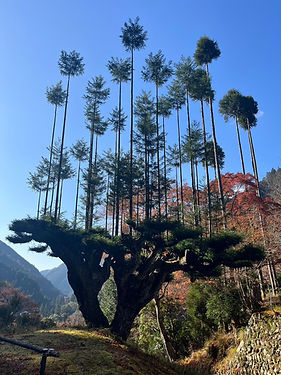
北山杉は、京都市北区中川地域で 600年以上にわたり育まれてきた杉の木で、1966年には京都府の木にも指定されました。 長い年月をかけ人の手を加えながら、まっすぐに天を目指して育つ姿が特徴です。 桂離宮をはじめ、様々な神社仏閣、数寄屋建築に使用され、古くから京を支える木として愛されてきました。
Kitayama cedar trees have been cultivated for over 600 years in the Nakagawa area of Kyoto City's Kita Ward and were designated as the official tree of Kyoto Prefecture in 1966. Characterized by their straight growth toward the sky over long periods with human care, they have been cherished since ancient times as trees supporting Kyoto, used in various shrines, temples, and sukiya-style architecture, including Katsura Imperial Villa.
現状と課題
01.高齢化
職人の高齢化
現在、職人のほとんどが60代以上の高齢者です。需要の減少による後継者育成にも歯止めがかかってしまっています。
01. Aging Workforce
Aging Artisans
Currently, most artisans are elderly individuals in their 60s or older. The decline in demand has also halted efforts to train successors.
02.需要の減少
北山杉の需要の減少
建築様式の変化による和室の減少に伴う需要の低迷。平成元年の約24万本から令和2年には約1万本とピーク時のピーク時の1/10以下の生産量となっています。
02. Declining Demand
Declining Demand for Kitayama Cedar
Demand has stagnated due to the decline in traditional Japanese-style rooms resulting from changes in architectural styles. Production has fallen from approximately 240,000 trees in 1989 to about 10,000 trees in 2020—less than one-tenth of its peak volume.


03.技術継承
枝打ちという熟練された技術
北山杉の美しさは、余計な枝を取り除く「枝打ち」と呼ばれる剪定作業によって生まれます。節のない美しい北山杉は長年の経験と熟練の技の成す芸術作品です。
03. Passing on the Craft
The Art of Pruning
The beauty of Kitayama cedar is born from the pruning technique known as “branch removal,” which involves removing unnecessary branches. The knot-free, beautiful Kitayama cedar is an artistic creation born from years of experience and masterful skill.
04.温暖化
数年に一度から毎年の作業へ
本来、北山台杉の剪定は2,3年に一度の頻度で行われていましたが、温暖化による育成の速さから毎年の剪定が必要となってきています。
04. Global Warming
From Every Few Years to Annual Work
Originally, pruning of the Kitayamadai cedars was performed every two or three years. However, due to accelerated growth caused by global warming, annual pruning has become necessary.


05.供給減少
供給量の減少による問題
需要が減る一方で、供給量も合わせて減少しています。ただ、神社仏閣の修復の際には必ず必要となる為、その少ない供給元を巡って木材の確保が問題になっています。
05. Declining Supply
Problems Arising from Reduced Supply
While demand is decreasing, supply is also falling. However, since wood is absolutely essential for the restoration of shrines and temples, securing it has become problematic as competition intensifies for the few remaining sources.

伝統と革新
北山杉の仕立てや製材の過程で出る剪定材や大鋸屑を、和紙・糸・布といった新たな資源へと 生まれ変わらせる。 この活動には、単なる一時的な支援ではなく、地域に根ざした「持続可能な仕組み」を築きた いという想いがあります。 木を仕立てることで収入が生まれる。そんな当たり前の循環を作るため、私たちは副産物を「ゴミ」ではなく「資源」として活用す る製品の開発を進めたいと思っています。 未利用資源をお金に変える新たな仕組みを築くことで、林業以外の収入源を生み出し、職人の育成や財源の確保につなげ、北山の林業を次世代へと繋げていきたいと考えています。
Tradition and Innovation
We transform pruning waste and large sawdust generated during the shaping and milling of Kitayama cedar into new resources like Japanese paper, thread, and fabric. This initiative stems from a desire to build a sustainable system rooted in the community, not merely provide temporary support. We want to develop products that utilize byproducts not as “waste” but as “resources,” creating that essential cycle where income is generated through wood processing. By building a new system that turns unused resources into money, we aim to create income sources beyond forestry. This will support artisan training and secure funding, ultimately connecting Kitayama's forestry to the next generation.

ABOUT US
法人名 一般社団法人Ju-Raku-So
代表理事 東丸 大範
理事 中田 治
山本 直人
E-mail home@jurakuso.or.jp
所在地 601-0122
京都市北区中川北山町97番地
Association Name Ju-Raku-So
Representative Director Hironori Tomaru
Director Osamu Nakata
Naoto Yamamoto
E-mail home@jurakuso.or.jp
Location 601-0122
97 Nakagawa Kitayama-cho, Kita-ku,Kyoto City
CONTACT
取り組みへのご質問や、当プロジェクトへの参画、ご協賛などに関するご連絡はこちらからお願い致します。